

History of Project
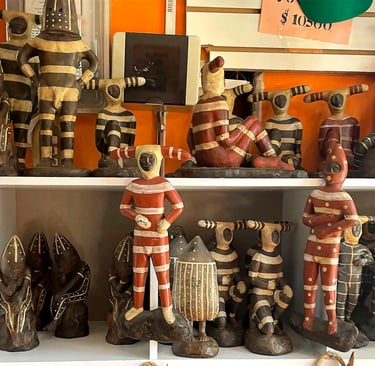
In 2023, my wife and I decided to celebrate our retirement by taking a five-month trip around the world. About a month into our journey, we found ourselves in Coyhaique, a small town in heart of Chilean Patagonia. As we strolled down the streets, I noticed a store that had some interestingly decorated figurative sculptures. I spoke to the store owner who told me that the objects depicted ceremonies from an extinct tribe. I asked if the items were made by the tribe’s descendants and was told that that was not the case. My mind raced with lots of questions about the issue of commodification without Indigenous benefit or control and if the extinction somehow nullified this issue. I had lingering questions about the extinction, but I could see the shop owner was not interested in having an extended conversation about the subject with a high maintenance tourist. I wondered if I was overthinking the twenty-dollar purchase and decided to buy the haunting sculptures and postcards that also mentioned the extinction. I added this story to what was becoming a long list of subjects that I would investigate after the trip.
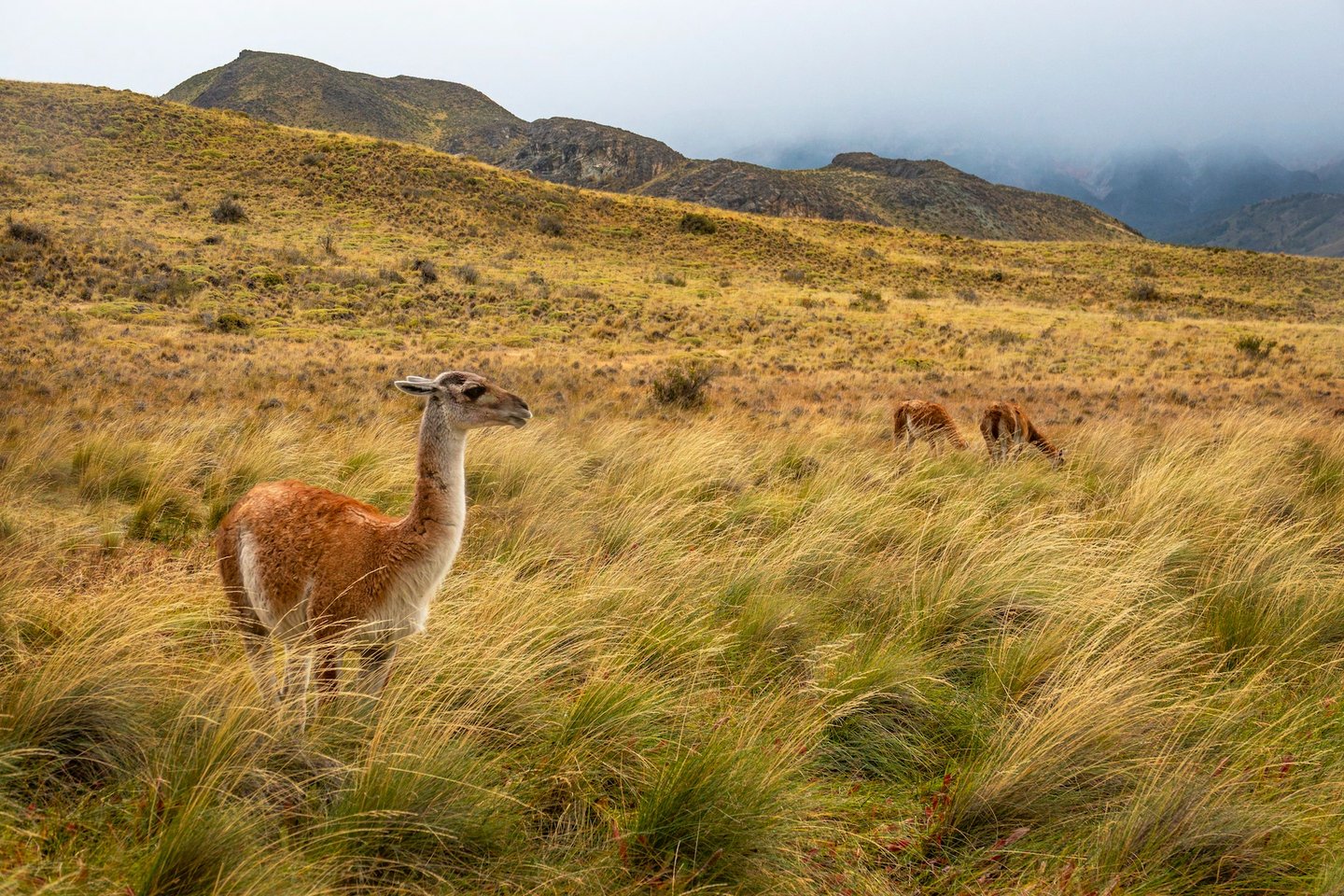
Guanaco at Patagonia National Parkin in the Aysén Region of Chile, Alberto Rey
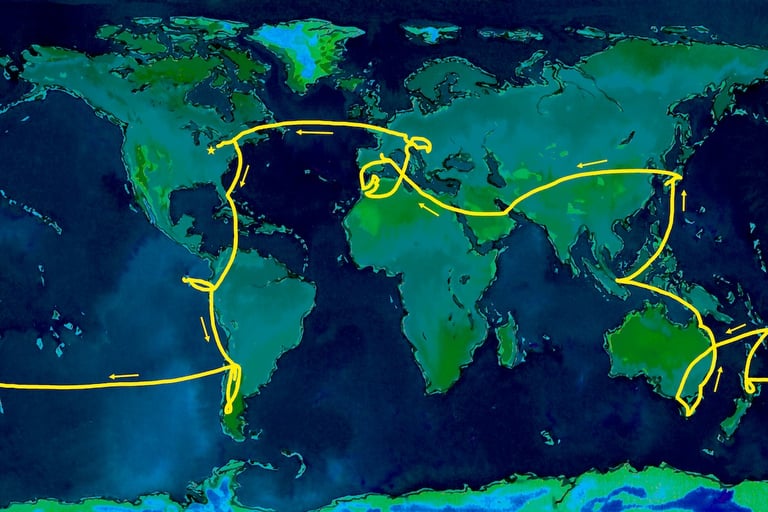

Map of our five-month trip around the world.
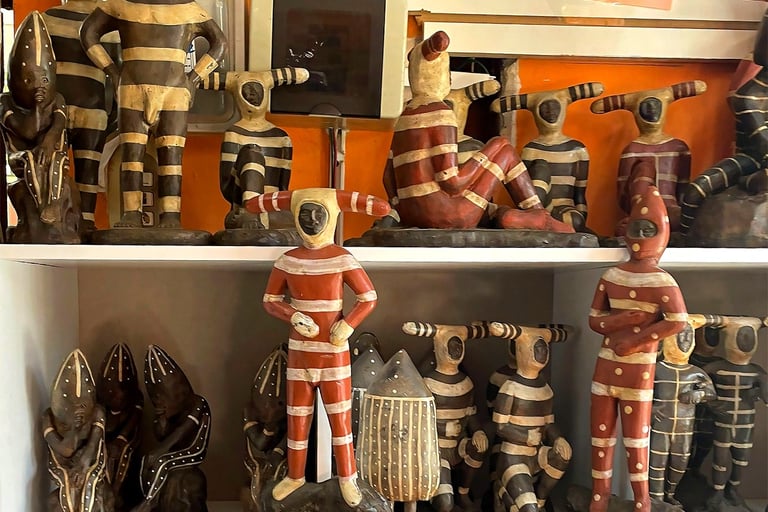
Shelves of Selk'nam inspired sculptures in Coyhaique in Chilean Patagonia.
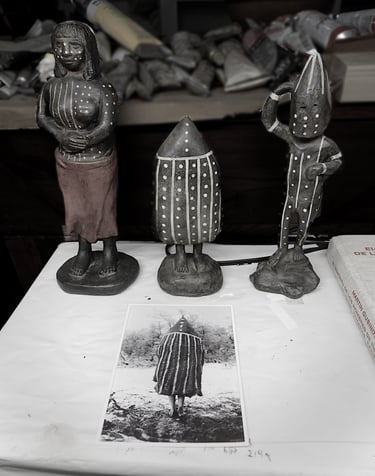
Sculptures and card that inspired the creation of the series.
Shortly after my return, I started writing magazine articles about the trip that included drawings and watercolors created in the field. Afterwards I started a new series of paintings, Atlas, that reflected the overwhelming diversity of experiences from the trip. Every day that I walked into the studio to work on these projects, I passed the small sculptures and cards from that little store in Chile. I slowly began formulating ideas of what my next body of work would need to address and how it would be a metaphor for the other dark lessons that I had learned during the trip. As soon as the Atlas exhibition was finished, I started searching out and reading everything I could find about the tribe that colored their bodies and went extinct, the Selk'nam. I was surprised to see that there was no shortage of academic papers and videos about the tribe. I also found books by Anne Chapman about the last Selk'nam and Martin Gusinde on his photographic journey in the early 1900’s through Tierra Del Fuego. It seemed that the Selk'nam’s story was well known across South America and parts of Europe but not on our continent. While trying to find photographic references for the land in the 1880’s that was at the core of the story, I came across the disturbing narrative and images of Julian Popper. Popper had compiled albums of these photographs that were in several museum collections. I contacted these museums to access these albums, and had the opportunity to work with Paola Grendi Ilharreborde, Director, and Franklin Pardon Cárdenas, Photographic Archivist, from the Magallanes Regional Museum in Puntas Arenas, Chile which was near the area where the Selk'nam lived for thousands of years. They provided high resolution images of Popper’s landscapes
and his manipulated death scenes while also providing a wealth of information about these Indigenous peoples. Once I read and viewed everything I had collected, I felt that I was as emotionally, intellectually and, somehow, spiritually, connected to the Selk'nam story as a non-native could be. I felt confident that my aesthetic decisions would reflect the larger narrative. I was committed to being respectful and honest in my storytelling.
I tried to connect my own narrative as an artist looking back at the history of a people from another time and hemisphere by layering their stories on top of some of my paintings that reflected my investigations into the passage of time and connections to the past. I also added notations on weather, time and dates during the moments that each narrative was created. There were times especially, at the beginning, where I questioned whether a non-native should or could tell this story, but I believed that this narrative was too important not to be shared. Although the specifics of this narrative are unique to the Selk'nam, themes of Western oppression and cruelty are threads that connect Indigenous peoples across the globe.
As our trip continued into the rest of Patagonia, the South Pacific, southern Asia and Africa. I realized that there was not one country that we visited that not been affected by the ravages of colonization. Slavery, rape, torture, forced land acquisition, and cultural degradation were common themes across all of these countries. I felt naive thinking that other parts of the world had somehow escaped the dark past reflected in of our own country’s history.